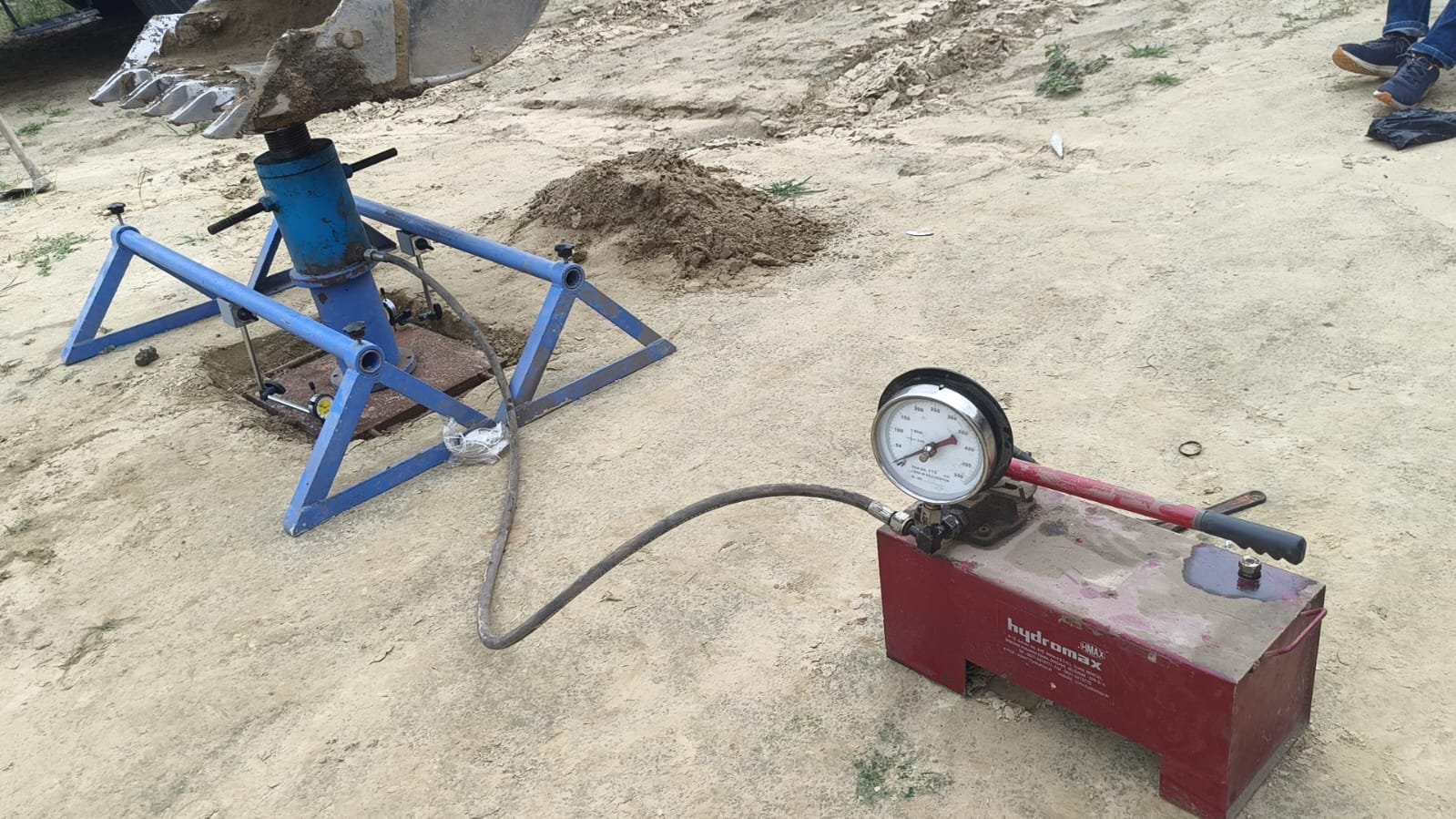
Plate Load Testing is an important field test used to determine the Safe Bearing Capacity (SBC) and settlement characteristics of soil at a proposed construction site. The test provides valuable information about how the soil behaves under applied structural loads and helps engineers design safe, stable, and economical foundations.
Before constructing any building or structure, it is essential to understand the load-bearing capacity of the soil beneath the foundation. Insufficient soil strength or excessive settlement can affect the stability and performance of a structure. Plate Load Testing provides site-specific data that assists structural and geotechnical engineers in making informed foundation design decisions.
A Plate Load Test is carried out directly at the construction site by placing a rigid steel plate at the proposed foundation level. Load is applied gradually to the plate, and the corresponding settlement of the soil is carefully measured at each loading stage.